Your First Trail Race: Choosing, Training and Racing Dirt Without Road-Race Assumptions
Quick Answer: Pick your first trail race by elevation profile, not distance — a hilly trail 10K costs about what a road half marathon costs you. Train time-on-feet in hours rather than miles, deliberately practice power-hiking the climbs, and on race day ignore your GPS pace entirely and run by effort. Walking the uphills isn’t quitting; it’s what the leaders do.
You ran a road half in 1:52 so a trail 10K should be, what, an hour?
Add ninety minutes and a snack. Trail races break nearly every assumption road running gave you, and the first-timers who have a great day are the ones who knew that going in.

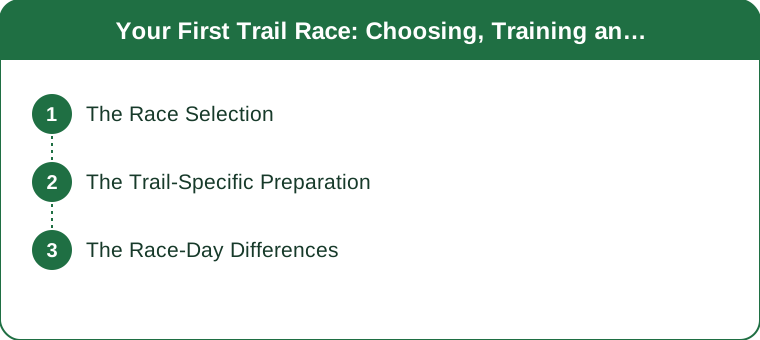
How Do You Choose a Good First Trail Race?
Read the elevation profile before the distance. This is the whole selection process in one line. A flat 15K on fire road and a 10K with 2,000 feet of climbing are completely different events, and the distance number tells you nothing about which you’re signing up for. As a rough guide: a trail race takes 1.5–2x the time the same road distance would, and steeper courses go well past that.
Check the technical rating. “Trail” covers everything from groomed gravel to rooty, rocky singletrack where you’re watching your feet the entire way. Race websites usually describe it; race reviews and photos tell you the truth. Smooth fire-road courses are the right first race for almost everyone.
Pick a generous cutoff. A first race with a forgiving time limit removes a pressure you don’t need. Check it before entering — some mountain races have cutoffs that assume experience.
Race local, on terrain you can train on. Ideally you can run part of the actual course beforehand. Destination races are wonderful; save them for race two or three.
Expect the culture to be nicer than you’re used to. Trail races tend to have low-key starts, volunteers who genuinely want to chat, and finish lines that look more like a potluck than a chip-timing operation. It’s one of the sport’s best features.

Training for Trail: What Actually Changes
Measure long runs in hours, not miles. If your race will take 2.5 hours, your longest training run should build toward roughly 2–2.5 hours on feet regardless of the distance that covers. Pace is meaningless here; duration is the stimulus.
Practice hiking on purpose. This is the single biggest adjustment for road runners. Power-hiking steep climbs is faster and far more efficient than trying to run them, and it’s a trainable skill with its own technique — hands on thighs, short steps, steady rhythm. Put deliberate hiking into your long runs so the transition feels automatic on race day.
Train the vertical weekly. Whatever climbing the race has, rehearse it. Hill repeats, stair sessions, or a treadmill at 8–12% incline if you live somewhere flat. One dedicated vertical session per week for 8 weeks changes the race completely.
Run on the actual surface. Downhill technique is where free time lives in a trail race, and it’s only learnable on real terrain. Quick feet, slightly forward lean, eyes 10–15 feet ahead rather than at your shoes. Rocky descents also beat up your quads in a way that road running doesn’t prepare you for.
Rehearse the walk-run transitions. Walk the ups, run the flats and gentle downs. Make the switch automatic so you’re not negotiating with your ego mid-race.
Nothing new on race day. Your vest, shoes, socks, and fuel all need training miles on them. And check the mandatory kit list — many trail races require you to carry water, a jacket, or a whistle, and they do check.
Practice eating. Trail efforts are longer and slower, which means your stomach can handle real food. Aim for 200–250 calories per hour and train your gut with whatever you plan to eat.
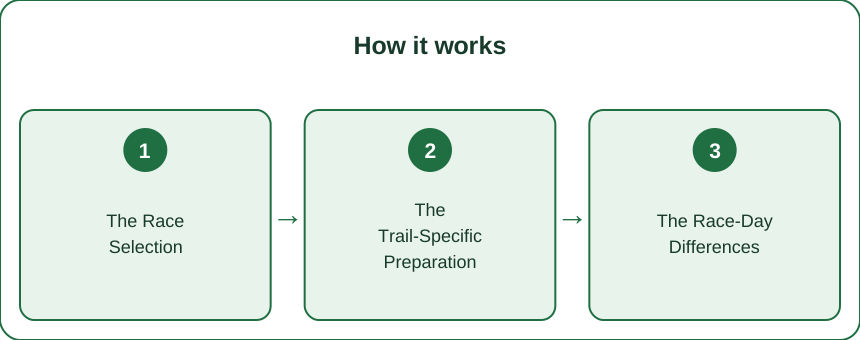
What Nobody Tells You About Trail Race Day
- Ignore your GPS pace completely. It will read 14:00/mile on a climb and you will feel bad about a number that means nothing. Race by effort. Some people cover the watch face with tape. That’s not an overreaction.
- Start-line position matters more than in a road race. Singletrack creates bottlenecks in the first mile. Seed yourself honestly — too far forward and you’ll be passed constantly; too far back and you’ll be stuck behind a conga line on the first climb.
- Passing has etiquette. “On your left when you can” — then wait. You pass when the person ahead finds a safe spot to let you by, not when you decide to. Say thanks.
- Aid stations serve actual food. Boiled potatoes with salt, quesadillas, fruit, candy, sometimes soup. Stopping to eat for 60 seconds is completely normal and usually a net gain.
- You carry your own water between stations. Gaps are longer than road races — sometimes 4–6 miles. That’s what the vest is for.
- Walk the climbs from the very first one. Not the third one when you’re already cooked. Early, deliberate hiking is what leaves you with legs at mile 8.
- Your finish time is course-specific trivia. There’s no comparing it to anything except your own future run of the same course. That’s genuinely freeing once it sinks in.
FAQ
How much slower is a trail race than a road race?
Typically 1.5–2x your road time for the same distance on a moderately hilly course, and more on technical or mountainous terrain. Elevation gain matters far more than distance — 1,000 feet of climbing costs most runners roughly 8–12 extra minutes.
Should I walk during a trail race?
Yes, on the climbs, and from the start rather than when you’re forced to. Power-hiking steep grades is more efficient than running them for nearly everyone, including elite trail runners — it’s a pacing strategy, not a concession.
What shoes do I need for my first trail race?
Trail shoes with moderate lugs are worth having for grip and rock protection, but if your course is mostly smooth fire road, road shoes are fine. The one rule that isn’t negotiable: race in shoes you’ve already put at least 30–40 miles on.
TL;DR:
- Choose by elevation profile and technical rating, not by distance.
- A trail race takes 1.5–2x the equivalent road time.
- Train hours on feet, one vertical session weekly, and deliberate power-hiking.
- Ignore GPS pace on race day and run by effort.
- Aid stations serve real food, walking the ups is strategy, and your time is course-specific trivia.
Keep Reading
This article is for general informational and styling purposes only. Fit, sizing, and product availability may vary.