Trail Running: Where the Road Ends and the Fun Compounds
Trail running is road running’s happier cousin: softer surfaces, better views, slower paces that nobody apologizes for, and a culture that celebrates walking uphill. The translation guide for runners ready to trade pavement for dirt.

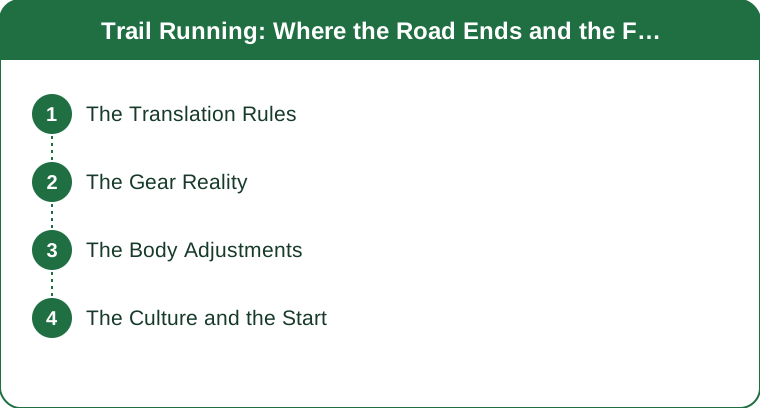
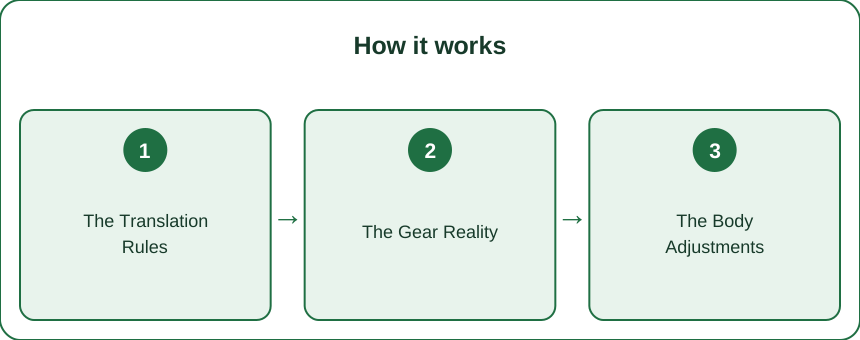
The Translation Rules
Road-to-trail conversions: PACE IS DEAD, long live effort (trail miles run 1-3 minutes slower than road miles at the same effort — GPS pace on trails is a comedy metric; run by feel and time instead), walking uphill is technique, not failure (every trail runner walks steep grades — it’s often FASTER and always smarter; the power-hike is a skill the elites practice), and eyes on the trail three meters ahead (the scenery stops are for stopping — the mid-stride view-admiring is how ankles meet roots).
The Gear Reality
What dirt actually requires: trail shoes when it gets technical (the grip-and-protection tier matters on rocks, mud and steepness — though smooth easy trails forgive road shoes; the gorpcore crossover finally pays fitness dividends), the run vest earlier than road running would need it (water and a layer — trails are farther from taps and help), and the humility kit (phone, a snack, and telling someone your route — the night-run safety logic applies to remoteness). Skip: new-gear paralysis; your first trail run needs shoes you own and a park with paths.

The Body Adjustments
What changes underneath: ankles and feet work overtime at first (uneven ground is the point — it’s also why trail runners develop bulletproof lower legs; the first weeks’ wobbles are the training), downhills are a learnable skill (short quick steps, slight lean forward, arms wide — the controlled-fall technique that transforms descents from brake-slamming to flying), and falls happen occasionally to everyone (the tuck-and-roll on dirt is a rite of passage; trails are softer than pavement, which is why the culture just dusts off and grins).
The Culture and the Start
The way in: start with runnable park trails (the green-space paths before the mountain epics — the progression is surface, then elevation, then distance), the effort-based schedule (replace one road run weekly with a trail hour and let the watch sulk), and the community tier (trail groups are famously welcoming and pace-diverse — the no-drop group run is the standard format). The conversion moment arrives predictably: the first run where you realize you’ve been grinning at a forest for forty minutes. Road running builds fitness; trail running builds enthusiasm for the fitness.
Effort over pace, walk the steeps, quick feet downhill, park trails first. Trail running is the same sport in a better room — and the room does half the motivating.
Keep Reading
This article is for general informational and styling purposes only. Fit, sizing, and product availability may vary.