Why Shortening Your Stride Uphill Beats Trying to Keep Your Flat-Ground Cadence
Runners trained to protect a consistent cadence on flat ground often try to hold that same rhythm going uphill, pushing through with bigger, harder strides to keep the numbers steady. But shortening the stride while slightly increasing cadence uses less energy per vertical foot climbed than forcing flat-ground mechanics onto a steep grade.

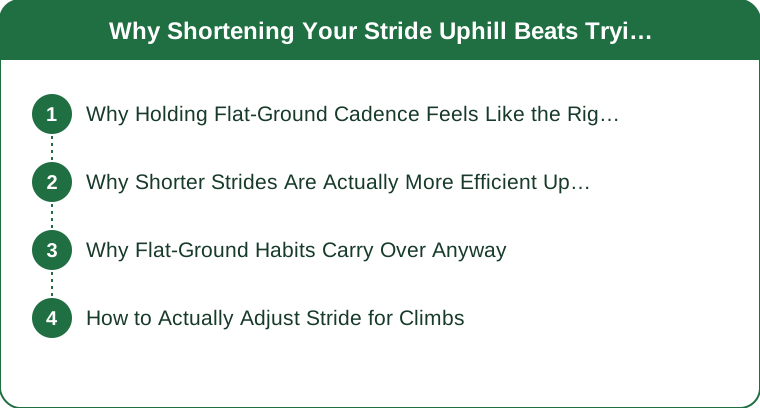
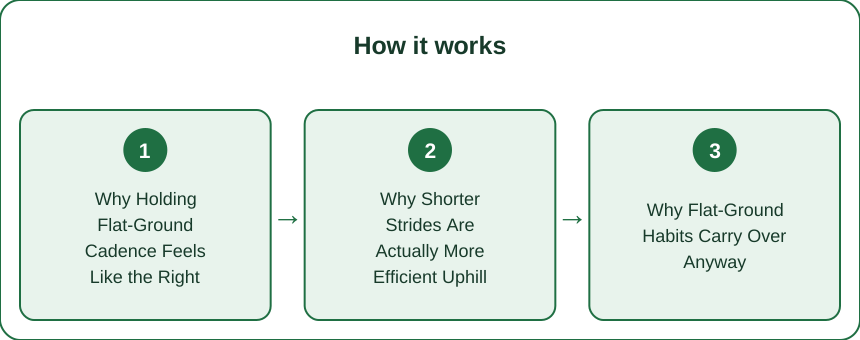
Why Holding Flat-Ground Cadence Feels Like the Right Goal
The training carryover: cadence being drilled as a key efficiency metric on flat runs, which makes maintaining that same number feel like the mark of good form no matter what the terrain looks like underfoot.
Why Shorter Strides Are Actually More Efficient Uphill
The energy cost reality: a long stride on an incline requiring more vertical lift and greater force from the calves and quads with each step, while a shorter, quicker stride keeps the foot landing closer under the body’s center of mass, reducing the braking and lifting effort needed on each contact.

Why Flat-Ground Habits Carry Over Anyway
The overlap: cadence looking like a single, universal number worth protecting in every running app and watch metric, which doesn’t distinguish between the flat-ground context it was built for and a steep uphill grade where the mechanics genuinely need to change.
How to Actually Adjust Stride for Climbs
The practical shift: deliberately shortening the stride on any sustained incline, letting cadence rise slightly rather than trying to hold the same stride length, and allowing overall pace to slow as a natural consequence, and the frame (shorter strides with slightly higher cadence use less energy per vertical foot than forcing flat-ground stride length uphill — adjusting stride, not just pace, is what actually saves energy on climbs.)
Runners trained to protect a consistent cadence on flat ground often try to hold that same rhythm going uphill, but a long stride on an incline requires more vertical lift and greater force from the calves and quads with each step, while a shorter, quicker stride keeps the foot landing closer under the body’s center of mass. Cadence gets tracked as a single universal number worth protecting in every running app, which doesn’t distinguish between flat ground and a steep grade where the mechanics genuinely need to change. Deliberately shortening the stride on any sustained incline, letting cadence rise slightly, is what actually saves energy on climbs.
Keep Reading
This article is for general informational and styling purposes only. Fit, sizing, and product availability may vary.