Trail Running Fueling: Why Road Running Nutrition Advice Doesn't Transfer
Quick Answer: Trail running fueling needs to start earlier and repeat more often than road running because uneven terrain slows your pace and extends time on feet — plan for 30-60g of carbs per hour after the first 60-75 minutes, and favor easy-to-digest options since climbing raises effort and can suppress appetite.
The fueling plan that worked fine for your last road half fell apart on a trail run half the distance. That’s not a fueling failure — it’s a different sport wearing the same shoes.

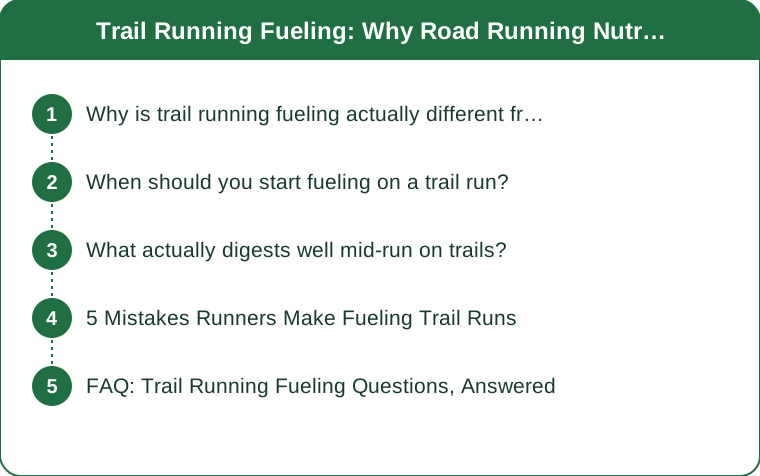
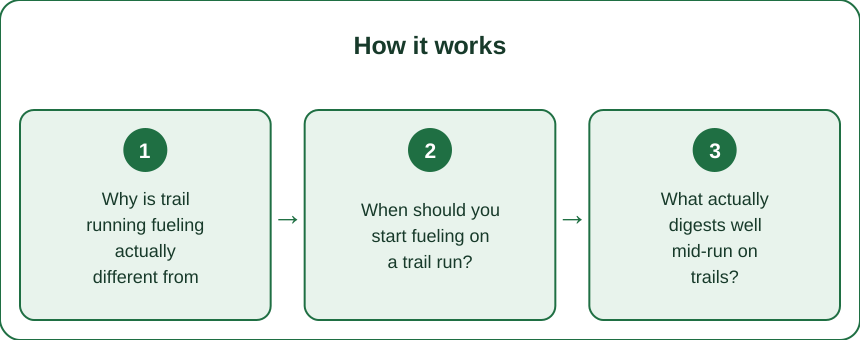
Why is trail running fueling actually different from road running?
Trail pace is inherently less predictable — climbs, technical footing, and elevation change mean the same distance can take 30-50% longer than a road run, extending the window your body needs fuel.
Harder efforts on climbs also route more blood to working muscles and less to digestion, which is why gels that sit fine on flat road efforts can feel harder to process mid-climb on trail.
When should you start fueling on a trail run?
For runs over 75 minutes, start taking in carbs around the 45-60 minute mark, before you feel like you need it — waiting for hunger or fatigue on trail often means you’re already behind, and it’s much harder to recover fueling once behind on technical terrain.
After that, aim for roughly 30-60g of carbs per hour, adjusted down on the steepest climbs when digestion is hardest and up on flatter, faster sections when it’s easier to process.

What actually digests well mid-run on trails?
Simple, easily digestible carbs work best: gels, chews, or diluted sports drink. Solid or high-fiber foods that work fine on an easy road run can sit heavy on a hard climb — save bars and real food for flatter recovery sections or aid station stops, not steep pushes.
Sipping small amounts consistently beats large gulps — a big volume of fluid or gel taken at once is more likely to cause stomach distress on jarring, uneven footing than the same amount spread out.
5 Mistakes Runners Make Fueling Trail Runs
1. Copying a road marathon fueling plan exactly, ignoring that time on feet is longer for the same distance.
2. Waiting until hungry to eat — trail effort variability makes it much harder to catch up once behind.
3. Trying new fuel on race day instead of testing it on training runs first.
4. Underestimating heat and altitude’s effect on appetite, both of which commonly suppress hunger exactly when you need to eat.
5. Ignoring electrolytes on long, sweaty efforts — cramping mid-trail is often a sodium problem, not a carb problem.
FAQ: Trail Running Fueling Questions, Answered
Do you need to fuel differently for uphill versus downhill trail sections?
Yes — save easy-to-digest fuel for climbs when effort is highest and digestion is hardest; downhills and flats are better windows for anything more substantial.
How much water should you carry on a trail run?
A rough starting point is 500-750ml per hour in moderate conditions, more in heat or at altitude, adjusted for how many refill points the specific trail offers.
Can you undertrain your gut for trail running fueling?
Yes — digestion under hard, jarring effort is a trainable tolerance. Practice your race-day fueling plan on training runs, not for the first time on race day.
TL;DR:
- Trail time-on-feet runs longer than road for the same distance — fuel earlier, not later
- Start carbs around 45-60 minutes in; aim for 30-60g/hour after that
- Save solid food for flats and downhills, simple carbs for climbs
- Practice race-day fueling on training runs — trail digestion is a trainable skill
Treat trail fueling as its own plan, not a road plan with dirt under it, and the bonk that used to hit at mile 8 stops showing up.
Keep Reading
This article is for general informational and styling purposes only. Fit, sizing, and product availability may vary.