Why Your Trail Shoes Lose Grip on Wet Rock (And What Actually Fixes It)
Quick Answer: Wet rock traction fails because water fills the microscopic gaps a rubber outsole normally grips into, so the fix is slowing your cadence slightly, landing flatter (not on the toe), and choosing a shoe with a softer, stickier rubber compound rather than an aggressive lug pattern meant for mud.
One minute you’re flying down a familiar descent, the next you’re windmilling your arms because a rock that’s been dry all summer just got rained on. Wet rock is one of the few surfaces where more experience doesn’t automatically mean more confidence — it just means you’ve fallen on it before.

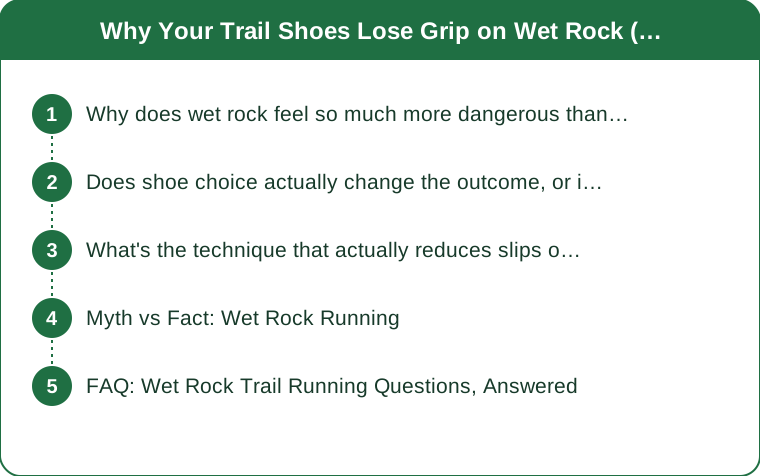
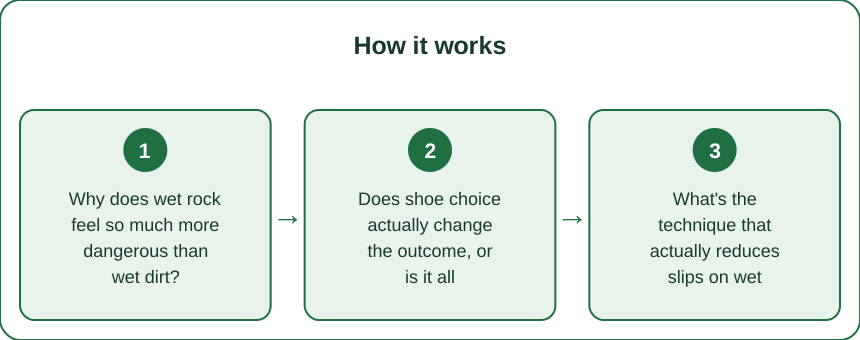
Why does wet rock feel so much more dangerous than wet dirt?
Dirt and mud have texture that a lugged outsole can dig into even when saturated, but smooth or semi-smooth rock offers almost nothing for aggressive lugs to bite, and a thin water film reduces the molecular friction rubber normally relies on. That’s why a shoe built for muddy singletrack can feel worse than a road shoe on a wet slab — the lugs that help in mud are dead weight on rock.
Does shoe choice actually change the outcome, or is it all technique?
Both matter, but rubber compound matters more than most runners assume — softer, stickier compounds (the kind climbing shoes and some trail shoes marketed for technical terrain use) maintain grip on wet rock significantly better than harder, more durable compounds designed for longevity. If you regularly run rock-heavy trails in wet climates, it’s worth prioritizing a sticky-rubber option even if it wears out a few months faster.

What’s the technique that actually reduces slips on wet rock?
Shortening your stride and landing with a flatter foot — rather than striking on the forefoot or reaching with a long stride — puts more surface area down at once and reduces the shear force that causes a slip. Slowing down by even 10-15% on wet technical sections isn’t overly cautious, it’s the single biggest lever you control in the moment.
Myth vs Fact: Wet Rock Running
Myth: Aggressive lugs are always better on technical trail. Fact: On wet rock specifically, aggressive lugs can reduce contact area and increase slip risk compared to a flatter, stickier sole. Myth: Running faster keeps you more stable on technical terrain. Fact: On wet rock, a slightly slower cadence with flatter foot strikes reduces slip risk more reliably than speed ever does.
FAQ: Wet Rock Trail Running Questions, Answered
Should I avoid rock sections entirely after rain?
Not necessarily — freshly wet rock (the first 20-30 minutes of rain) is often more slippery than rock that’s been rained on for a while and had surface algae or dust washed off, so timing matters as much as avoidance.
Do trekking poles actually help on wet rock?
Yes — poles add two additional points of contact and let you test footing before committing weight, which is especially useful on wet slab sections where a slip has no easy recovery.
How do I know if my shoes have lost too much grip to trust on wet rock?
If you’re sliding on dry pavement in your trail shoes during a casual walk, the rubber has likely hardened or worn past the point of reliable wet-rock grip — that’s the signal to replace them before your next technical outing.
TL;DR:
- Wet rock removes the texture that lugged outsoles need to grip, unlike wet dirt or mud
- Sticky rubber compounds outperform aggressive lug patterns on smooth wet rock
- Shortening stride and landing flatter reduces slip risk more than speed does
- Poles add stability and let you test footing before committing weight The runners who look calmest on wet rock aren’t braver — they’ve just learned to trade a little speed for a lot more control, and it’s a trade worth making.
Keep Reading
This article is for general informational and styling purposes only. Fit, sizing, and product availability may vary.