Why Your Trail Running Shoes Feel So Different From Road Shoes
Quick Answer: Trail shoes prioritize grip, stability, and protection with stiffer soles and lower stack heights, while road shoes prioritize cushioning and rebound for a flat, predictable surface. The difference is felt most on uneven ground and in cornering.
You pulled out your road running shoes for a wooded trail and spent the whole run feeling like you were on stilts — sliding on roots, rolling your ankle on loose gravel. That’s not bad luck. The shoes were built for a completely different surface.
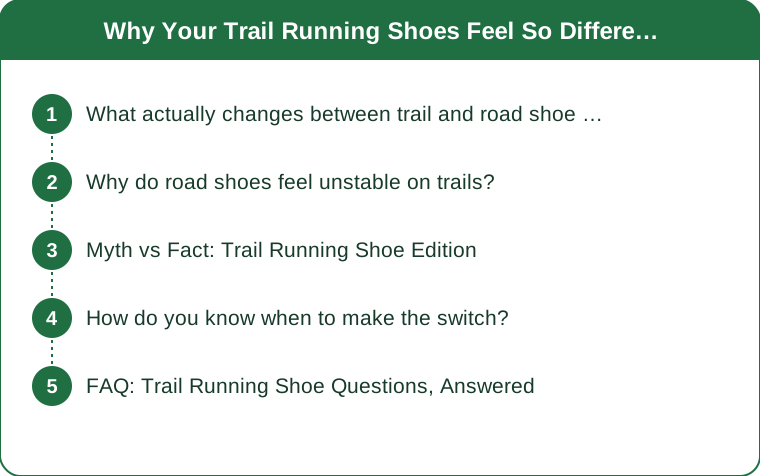
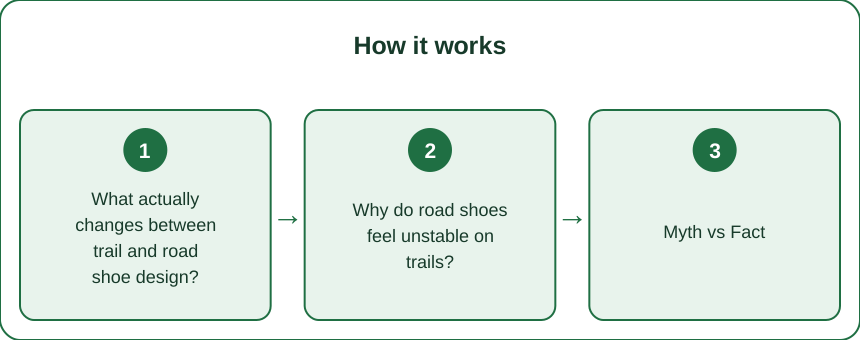
What actually changes between trail and road shoe design?
Three things: outsole lugs, stack height, and torsional stiffness.
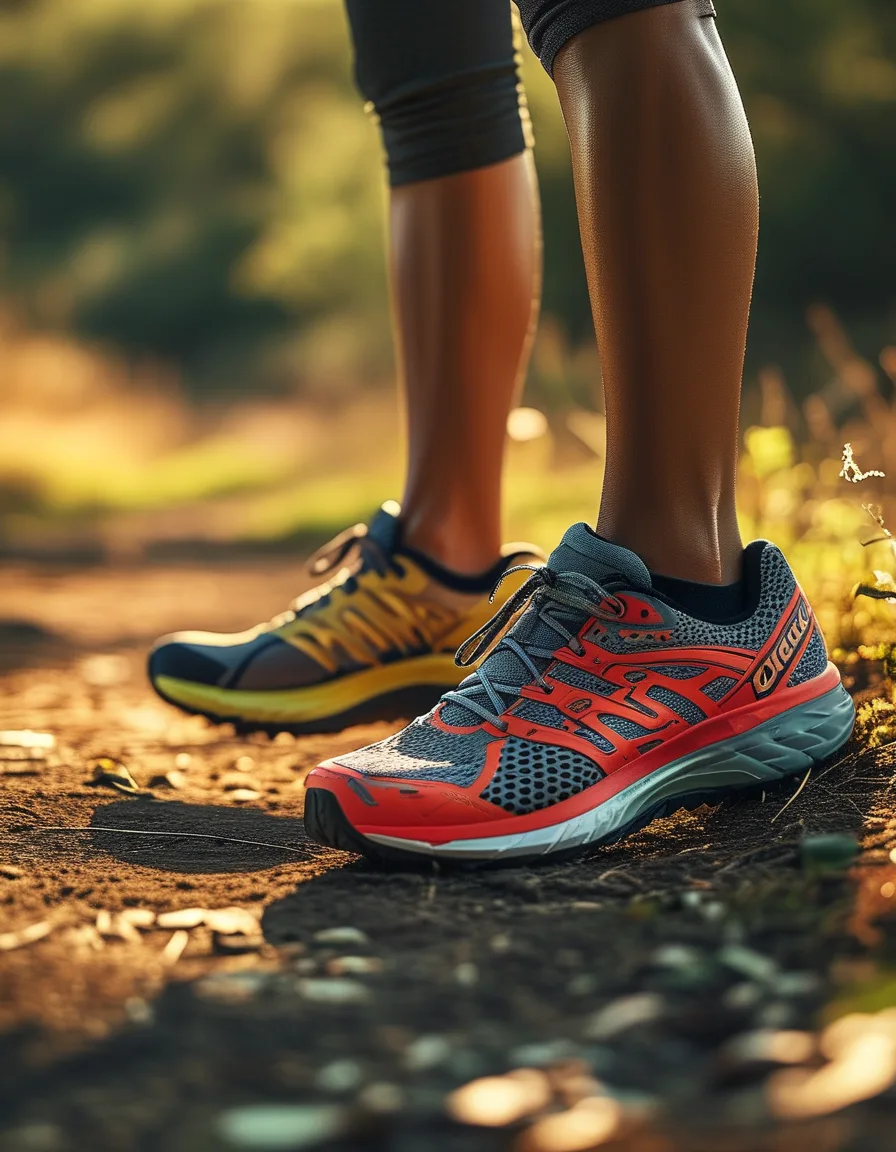
Trail shoes have deep, aggressive lugs (often 3-5mm) for grip on dirt, mud, and rock. Road shoes have flat, shallow tread since pavement doesn’t need bite. Trail shoes also run a lower, firmer stack so your foot sits closer to the ground for stability on uneven terrain, while road shoes stack more soft foam for repetitive-impact cushioning.
Why do road shoes feel unstable on trails?
Because road shoes are tuned for a flat, predictable surface — the extra cushioning that feels great on pavement actually works against you on roots and rocks, letting your foot roll sideways with nothing to stop it.
That soft, high stack height is the exact reason ankles roll more often on trail in road shoes: there’s more foam between your foot and the ground, and less of that ground-feel needed to react to a sudden angle change.

Myth vs Fact: Trail Running Shoe Edition
Myth: Any running shoe works fine on a groomed, flat trail. Fact: True for wide gravel paths, but most ‘trail’ still means roots, mud, and loose rock somewhere in the loop — grip matters even on easy-rated trails.
Myth: Trail shoes are automatically heavier and slower. Fact: Modern trail shoes have closed the weight gap significantly; the real cost is less cushioning rebound, not raw weight.
Myth: You need trail shoes even for a paved park loop. Fact: If it’s pavement, road shoes still win — lugs on pavement actually wear down fast and feel worse underfoot.
How do you know when to make the switch?
If your regular runs include loose dirt, mud, rock gardens, or significant elevation change, trail shoes will noticeably improve your footing and confidence. For crushed gravel paths or dry, hard-packed flat trails, a hybrid or even a durable road shoe can still work fine.
A simple test: if you’ve slipped or rolled an ankle on a route twice, that’s your sign to switch, not push through in road shoes.
FAQ: Trail Running Shoe Questions, Answered
Can I use trail shoes for road running too?
Occasionally, yes, but the lugs wear down fast on pavement and the stiffer sole feels less springy over miles of road — it’s a downgrade for daily road mileage.
Do trail shoes need to be a different size than road shoes?
Often a half size up, since trail shoes are typically worn with thicker socks and swelling feet need more room on long descents.
Are trail shoes worth it for just one or two trail runs a month?
If those runs involve real terrain, yes — the stability difference shows up even on occasional use, and ankle safety isn’t something to save for ‘often enough.’
TL;DR:
- Trail shoes: deep lugs, lower stack, stiffer sole — built for grip and stability
- Road shoes: soft high-stack cushioning — built for flat, predictable surfaces
- Rolling an ankle twice on a route is your sign to switch shoe types
- Trail shoes on pavement wear down fast — match the shoe to the actual surface
If your usual loop has roots or loose rock, the shoe swap will likely fix more of your footing issues than any drill.
Keep Reading
This article is for general informational and styling purposes only. Fit, sizing, and product availability may vary.